
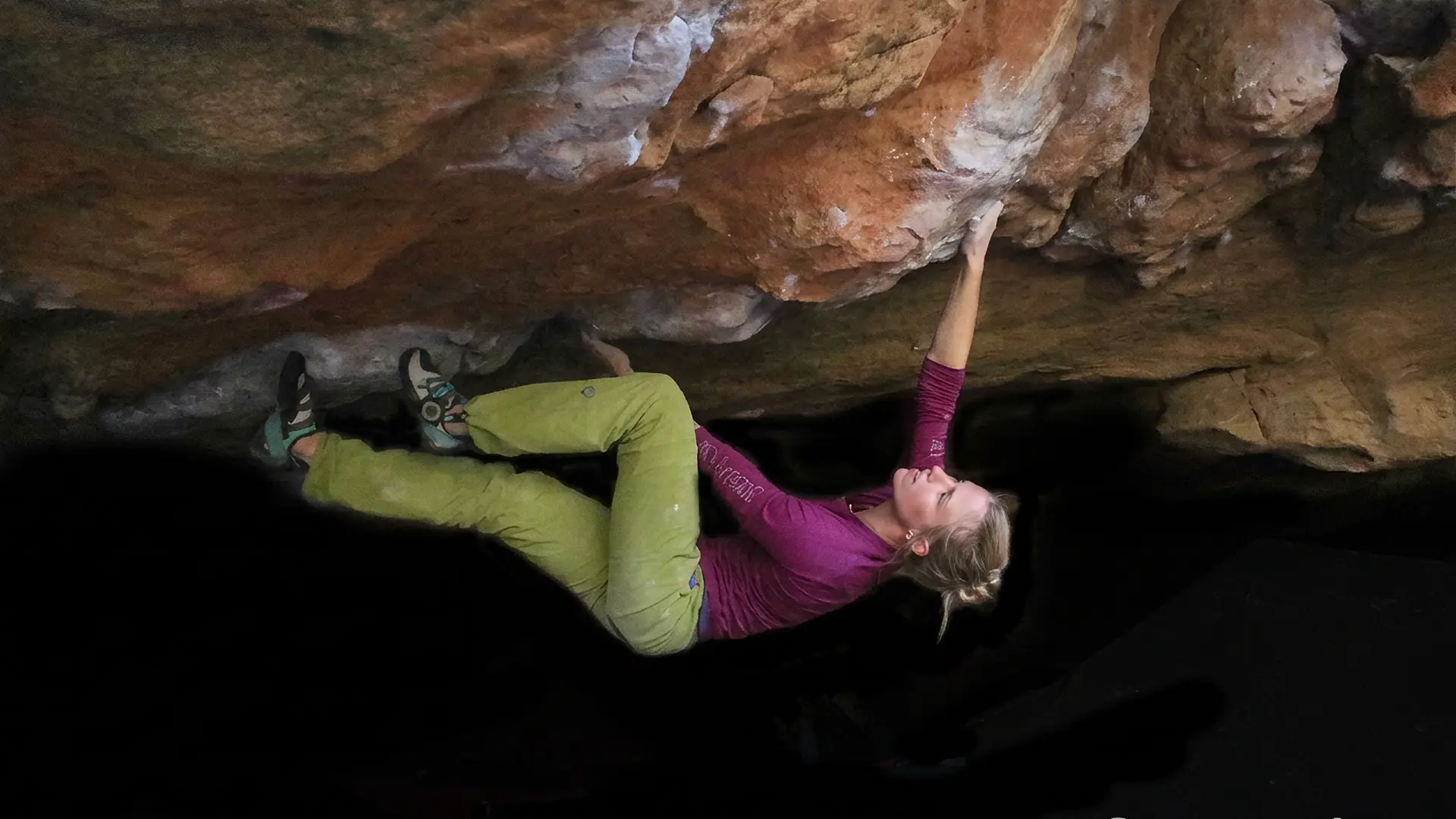

De Pakhuys is a privately owned guest farm located in the scenic Agter-Pakhuis Valley, roughly 26 km past Clanwilliam. It stands as one of the most central, highly concentrated, and celebrated sub-areas within the greater Rocklands region. Unlike the public CapeNature lands which have strict environmental daily visitor limits, De Pakhuys is a dedicated climber's paradise managed directly on private farmland.


Local Advertisers
The property features hundreds of world-class boulder problems scattered across multiple distinct topography styles:
- The Plateau (Close & Far): A vast, flat, elevated expanse featuring an incredible concentration of classic problems. Access is quick and straightforward from the main campground, making it highly popular.
- Fields of Joy: Celebrated for its collection of high-quality, approachable lines and intermediate classics winding through open terrain.
- Arch Valley: Tucked within stunning weathered sandstone geometry, this area features iconic, sweeping testpieces like Arch Valley (7A) and Salty Egg
- Waterfall Boulders: Located down along the river canyon, providing dramatic shade and highly aesthetic lines.
- Permit Requirements: All climbers must possess a valid Rocklands bouldering permit to step onto the crags.
- Tariffs: Permits can be conveniently purchased directly at the De Pakhuys Camp Office or online via Quicket. Standard pricing typically runs R80 for a day permit, R130 for a weekend, and R260 for a full week.
- Stay-and-Climb Perk: Visitors booked into De Pakhuys accommodation or campsites traditionally gain access to the farm's immediate sectors included with their lodging fees.
- The Social Hub: The central campsite features a popular communal kitchen, braai (BBQ) pits, and an outdoor climber's bar/lapa which serves as the prime evening social space.
- Connectivity: While phone reception is highly limited across the valley, free Wi-Fi is provided for guests around the central office and bar area.
- Approach Times: Most sectors feature highly accessible, easy-to-navigate approach trails ranging between 10 to 20 minutes.
The sandstone formations at De Pakhuys are globally famous for their highly geometric, wind-scoured features. While you can find almost every style of climbing here, the landscape is defined by three dominant physical styles.
Roofs and Power Endurance
The weathered sandstone has created horizontal roofs, horizontal wave breaks, and overhangs.
- This style requires raw power, strong core tension to keep your feet tracking on the rock, and high power-endurance.
- You will find yourself dynamic-slapping between massive horizontal shelves, deep pumpy tracks, and bicycle-tokemoving out of deep caves.
Filter by climbing genre
Trail
Distance
Elevation
Duration
Grade
Interactive Icons

Requires GAIA GPS App

Google Maps
Icons and Symbols







.jpg)

